
• 9863020202    
  • contact@financeseva.in

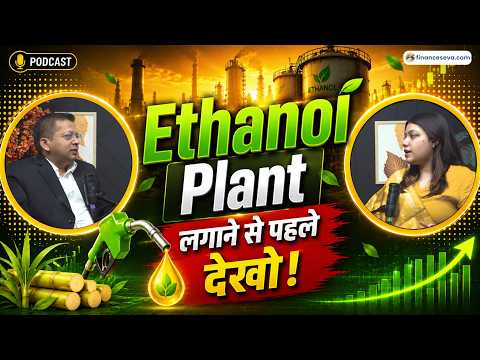
India ka Next Big Business? Ethanol Industry Full Explained ???? #podcast

  • 27-Jun-2026

India’s Next Big Business? Ethanol Industry Explained (2026 Guide)

Introduction

India is rapidly emerging as one of the world's largest ethanol-producing nations. What was once considered merely a by-product of the sugar industry has now become a strategic fuel that supports energy security, reduces crude oil imports, boosts farmers' income, and promotes environmental sustainability.

With the Government of India's aggressive ethanol blending targets and billions of dollars being invested in ethanol production plants, the industry has become one of the fastest-growing sectors in the country.

Whether you are an entrepreneur, investor, farmer, sugar mill owner, grain processor, or someone interested in renewable energy, understanding the ethanol industry can open up significant business opportunities.

What is Ethanol?

Ethanol (Ethyl Alcohol – C?H?OH) is a renewable biofuel produced through the fermentation of agricultural products rich in sugar or starch.

It is primarily produced from:

  • Sugarcane Juice
  • Sugarcane Molasses
  • B-Heavy Molasses
  • C-Heavy Molasses
  • Damaged Food Grains
  • Maize (Corn)
  • Rice
  • Wheat
  • Broken Rice
  • Cassava
  • Sweet Sorghum
  • Agricultural Biomass (Second Generation Ethanol)

Unlike petrol, ethanol burns cleaner and emits fewer greenhouse gases.

What is the Ethanol Industry?

The ethanol industry consists of companies involved in:

  • Ethanol Manufacturing
  • Distilleries
  • Biofuel Processing
  • Storage
  • Transportation
  • Fuel Blending
  • Equipment Manufacturing
  • Plant Engineering
  • Chemical Processing
  • Feedstock Supply
  • Technology Providers

The produced ethanol is mainly supplied to:

  • Oil Marketing Companies (OMCs)
  • Pharmaceutical Companies
  • Chemical Industries
  • Beverage Industry
  • Cosmetics Industry
  • Industrial Solvents Manufacturers

Why is Ethanol Important for India?

India imports a large share of its crude oil requirement.

Every increase in ethanol blending helps:

  • Reduce crude oil imports
  • Save foreign exchange
  • Lower carbon emissions
  • Increase farmers' income
  • Improve rural employment
  • Support energy security
  • Promote the circular economy

Vision of India's Ethanol Industry

The Government of India envisions ethanol as a major pillar of clean energy.

Key Objectives

  • Achieve higher ethanol blending in petrol.
  • Reduce dependence on imported fossil fuels.
  • Promote biofuel-based industries.
  • Double farmers' income through additional demand for crops.
  • Encourage private sector investment.
  • Develop second-generation ethanol technologies.
  • Generate employment in rural India.

Ethanol Blending Programme (EBP)

India launched the Ethanol Blending Programme to mix ethanol with petrol.

Benefits include:

  • Lower pollution
  • Better engine performance
  • Reduced fuel costs
  • Less dependence on imported crude oil
  • Stable income for sugar mills and grain producers

Types of Ethanol

1. Fuel Ethanol

Used in petrol blending.

2. Industrial Ethanol

Used in:

  • Paint
  • Ink
  • Chemicals
  • Solvents
  • Adhesives

3. Extra Neutral Alcohol (ENA)

Used for:

  • Liquor
  • Cosmetics
  • Perfumes
  • Pharmaceuticals

4. Absolute Ethanol

Used in laboratories and chemical industries.

Raw Materials Used in Ethanol Production

Sugar-Based

  • Sugarcane Juice
  • Molasses
  • Sugar Syrup

Grain-Based

  • Maize
  • Rice
  • Wheat
  • Broken Rice

Biomass-Based

  • Rice Straw
  • Wheat Straw
  • Bamboo
  • Bagasse
  • Corn Cobs

Ethanol Manufacturing Process

Step 1

Collection of feedstock.

Step 2

Grinding or juice extraction.

Step 3

Fermentation using yeast.

Step 4

Distillation.

Step 5

Dehydration.

Step 6

Storage.

Step 7

Supply to Oil Marketing Companies.

Major Consumers of Ethanol

Fuel Sector

  • Petrol blending

Pharmaceutical Industry

  • Syrups
  • Sanitizers
  • Medicines

Chemical Industry

  • Solvents
  • Acetic Acid
  • Ethyl Acetate

Cosmetics

  • Perfumes
  • Hair Products
  • Skin Care

Beverage Industry

  • Alcoholic beverages

Business Opportunities in the Ethanol Industry

Entrepreneurs can invest in:

  • Ethanol Distillery
  • Grain Processing
  • Sugar Mill Expansion
  • Ethanol Storage
  • Biofuel Transportation
  • Engineering Services
  • Plant Construction
  • Industrial Equipment Manufacturing
  • Waste-to-Energy Projects
  • Biomass Collection

Who Can Start an Ethanol Business?

Eligible participants include:

Sugar Mills

Traditional ethanol producers using molasses or sugarcane juice.

Grain Processing Companies

Using maize, rice, wheat, and other grains.

Farmer Producer Organizations (FPOs)

Supplying feedstock or participating in integrated projects.

Agri-Entrepreneurs

Setting up biomass or grain-based ethanol units.

Distillery Owners

Expanding into fuel ethanol production.

Chemical Manufacturers

Producing industrial-grade ethanol.

Corporate Investors

Setting up greenfield ethanol plants.

Public-Private Partnerships

Large-scale integrated biofuel projects.

Government Support for the Ethanol Industry

The Government has introduced several measures:

  • Interest subvention schemes for new distilleries.
  • Long-term ethanol procurement by Oil Marketing Companies.
  • Support under the National Policy on Biofuels.
  • Promotion of grain-based ethanol.
  • Incentives for second-generation ethanol projects.
  • Faster environmental approvals in eligible cases.
  • Encouragement for modern distillery technologies.

Investment Required

The investment depends on plant capacity.

Plant CapacityEstimated Investment (Approx.)
Small Distillery?25–60 crore
Medium Plant?60–150 crore
Large Commercial Plant?150–500+ crore

Costs vary based on feedstock, technology, utilities, land, and environmental systems.

Revenue Sources

An ethanol plant can earn from:

  • Fuel ethanol sales
  • Industrial alcohol
  • ENA
  • DDGS (Distillers Dried Grains with Solubles)
  • Carbon dioxide recovery
  • Bio-fertilizers
  • Power generation (in integrated plants)

Profitability of an Ethanol Plant

Profit depends on:

  • Feedstock cost
  • Government procurement prices
  • Plant efficiency
  • Capacity utilization
  • Logistics costs
  • Energy consumption
  • By-product sales
  • Financing costs

Well-managed integrated plants often benefit from multiple revenue streams, while profitability can decline sharply if feedstock prices rise or plants operate below capacity.

Risks in the Ethanol Industry

Feedstock Price Volatility

Crop prices may fluctuate.

Government Policy Changes

Procurement prices and blending policies may change.

Environmental Compliance

Strict pollution control norms must be met.

Water Requirement

Distilleries consume significant water and require efficient recycling.

Capital Intensive

Large initial investment.

Technology Risk

Poor plant efficiency reduces margins.

Raw Material Availability

Seasonal shortages can impact production.

Advantages of the Ethanol Industry

  • Growing domestic demand
  • Government support
  • Long-term policy focus
  • Cleaner fuel
  • Import substitution
  • Higher farmer income
  • Rural employment generation
  • Export potential (subject to policy)
  • Multiple revenue streams
  • Strong future growth prospects

Challenges

  • High capital expenditure
  • Feedstock competition with food use
  • Water-intensive operations
  • Environmental clearances
  • Logistics and storage
  • Technology upgradation
  • Skilled manpower requirements

Future of the Ethanol Industry in India

The future outlook is positive due to:

  • Rising fuel demand
  • Expansion of grain-based distilleries
  • Increasing use of agricultural residues
  • Investment in second-generation ethanol
  • Adoption of flexible-fuel vehicles
  • Continued government support for cleaner fuels
  • Opportunities in allied products such as sustainable aviation fuels and bio-chemicals

Conclusion

India's ethanol industry is evolving from a sugar-industry by-product into a strategic renewable energy sector. It offers opportunities for farmers, entrepreneurs, investors, equipment manufacturers, and financial institutions. While the sector requires significant capital and careful compliance with environmental regulations, supportive policies, expanding demand, and diversified revenue streams make it one of the country's most promising green industries.

Top 10 Frequently Asked Questions (FAQs)

1. What is ethanol?

Answer: Ethanol is a renewable biofuel made by fermenting sugar- or starch-rich agricultural products such as sugarcane, molasses, maize, rice, and wheat. It is widely used for fuel blending, industrial applications, pharmaceuticals, and beverages.

2. Why is India promoting ethanol?

Answer: India promotes ethanol to reduce crude oil imports, improve energy security, cut emissions, increase farmers' income, and support the transition to cleaner fuels.

3. Who can set up an ethanol plant?

Answer: Sugar mills, grain processors, agri-entrepreneurs, corporate investors, distillery owners, and eligible business entities that meet regulatory and environmental requirements can establish ethanol production units.

4. What raw materials are used to produce ethanol?

Answer: Common feedstocks include sugarcane juice, molasses, maize, rice, wheat, broken rice, cassava, sweet sorghum, and agricultural biomass.

5. Is the ethanol business profitable?

Answer: It can be profitable if the plant operates efficiently, secures reliable feedstock, complies with regulations, and benefits from stable demand and by-product sales. Profitability varies with market conditions and operating costs.

6. How much investment is required for an ethanol plant?

Answer: Depending on capacity and technology, investment can range from around ?25 crore for a smaller plant to ?500 crore or more for large integrated facilities.

7. What are the major uses of ethanol?

Answer: Ethanol is used in fuel blending, pharmaceuticals, industrial chemicals, cosmetics, sanitizers, solvents, and beverage manufacturing.

8. What are the main risks in the ethanol industry?

Answer: Key risks include fluctuations in feedstock prices, policy changes, environmental compliance costs, water availability, logistics, and high capital requirements.

9. Does the government support ethanol projects?

Answer: Yes. The government has introduced supportive policies such as procurement by Oil Marketing Companies, incentives for eligible projects, and measures to encourage biofuel production, subject to applicable schemes and regulations.

10. Is the ethanol industry the next big business opportunity in India?

Answer: Many industry observers view ethanol as a high-growth sector because of strong policy support, rising demand for cleaner fuels, and expanding investment. However, success depends on efficient operations, financial planning, feedstock availability, and regulatory compliance.


How Would You Rate This Article ?