
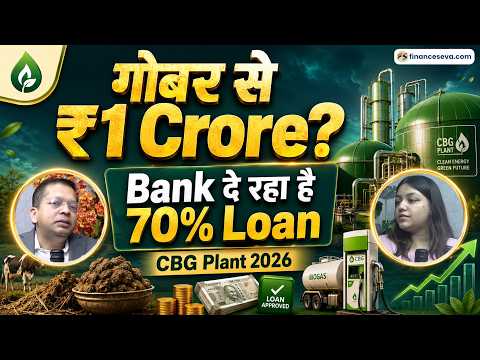
"???? ?? ?15 ????? ?? ?100 ????? ?? ?? CBG Plant ????? ????? ???? ???? ????? ??????? ???? ??? ???-??? ?? ???? ??? ???? ???? ????? Margin Money ?????? Project Report ???? ?????? Eligibility ???? ??? ?? ?????? ??? ??? ???? CBG Plant Finance ?? ???? ??????? ???? ???? ????"
CBG means
Compressed Bio Gas
It is a purified form of Biogas having methane content above 90%.
After purification and compression, Bio Gas becomes CBG, which is almost equal to Natural Gas.
It can be used as
CBG is produced from
Complete Process
Collection of Biomass
?
Pre-processing
Shredding
Mixing
Slurry Preparation
?
Anaerobic Digestion
Microorganisms convert waste into Biogas.
Gas Produced
?
Gas Purification
Removal of
Methane purity becomes 90-95%
?
Compression
Gas is compressed up to around 200–250 Bar and filled into cascades or cylinders.
?
Sale
CBG is sold to
Apart from Gas, plant also produces
Solid Fertilizer
Bio Slurry
This creates an additional revenue source.
India imports huge quantities of LNG and Crude Oil.
Government wants
? Reduce Import Bill
? Reduce Pollution
? Manage Agricultural Waste
? Increase Farmer Income
? Promote Circular Economy
? Support Clean Energy
SATAT
Sustainable Alternative Towards Affordable Transportation
Launched by the Government of India to encourage entrepreneurs to establish CBG plants and supply gas to Oil Marketing Companies under long-term procurement arrangements.
Major buyers include public sector oil marketing companies through their CBG procurement framework.
Approximate Cost
| Capacity | Estimated Project Cost |
|---|---|
| 5 TPD | ?15-20 Crore |
| 10 TPD | ?25-35 Crore |
| 15 TPD | ?40-55 Crore |
| 20 TPD | ?60-80 Crore |
| Large Plant | ?80-100+ Crore |
(Project cost varies depending on technology, land, civil works, feedstock availability, and storage.)
A CBG Plant earns through
Sale of
? CBG
? Organic Fertilizer
? Bio Slurry
? Carbon Credits (where applicable)
? Tipping Fees (for certain municipal waste projects)
Eligible Borrowers
Individual Entrepreneurs
Private Limited Company
LLP
Partnership Firm
Farmer Producer Organization (FPO)
Co-operative Society
Existing Manufacturing Companies
Energy Companies
Waste Management Companies
Generally
?15 Crore
to
?100 Crore
or even more depending upon
Project Viability
DSCR
Cash Flow
Promoter Contribution
Technology
Offtake Agreement
Potential lenders include:
Banks may finance
Land Development
Civil Construction
Plant & Machinery
Gas Purification Unit
Compression System
Storage System
Utilities
Electrical Installation
Working Capital
Installation Cost
Pre-operative Expenses
Usually
20% to 35%
Depending upon
Project
Bank
Credit Rating
Promoter Experience
Normally
8–15 Years
including a moratorium during project implementation, depending on lender policy and project cash flows.
Depends upon
Credit Rating
Bank
Project Risk
Collateral
Market Conditions
Generally, project finance rates vary by lender and prevailing benchmarks.
Primary Security
Entire Plant
Machinery
Current Assets
Assignment of Receivables
Collateral Security
Land
Building
Additional Property
Corporate Guarantee
Personal Guarantee
PAN
Aadhaar
Photographs
Income Tax Returns
Net Worth Statement
Bank Statement
KYC
Company Registration
GST
MOA
AOA
Partnership Deed
Udyam Registration (if applicable)
Board Resolution
Detailed Project Report
CMA Data
Projected Balance Sheet
Projected Profit & Loss
Projected Cash Flow
DSCR
IRR
Break Even Analysis
Sensitivity Analysis
Technology Agreement
Plant Layout
Machinery Quotations
Feedstock Agreement
Raw Material Availability
Water Availability
Power Connection
Environmental Clearances (as applicable)
Land Documents
Lease Deed
Sale Agreement
Quotation
Supplier Agreement
Buyer Agreement
Offtake Agreement
Insurance Proposal
Good Credit History
Promoter Contribution
Viable Project
Sufficient Feedstock
Long-Term Supply Agreement
Technical Feasibility
Financial Feasibility
Experienced Management
Pollution Clearance
Land Availability
Banks mainly check
Feedstock Availability
Gas Yield
Technology
Project Cost
Cash Flow
Debt Service Coverage Ratio
Internal Rate of Return
Promoter Experience
Market Demand
Risk Analysis
Government support may include:
Support varies by state and the specific scheme in force.
Subsidy availability depends on:
Since subsidy schemes change over time, applicants should verify the latest guidelines before finalizing the project.
Step 1
Project Idea
?
Step 2
Land Selection
?
Step 3
Technology Selection
?
Step 4
Raw Material Assessment
?
Step 5
Detailed Project Report
?
Step 6
Financial Model
?
Step 7
CMA Data Preparation
?
Step 8
Apply for Bank Loan
?
Step 9
Technical Appraisal
?
Step 10
Financial Appraisal
?
Step 11
Site Inspection
?
Step 12
Sanction Letter
?
Step 13
Execution of Loan Documents
?
Step 14
Disbursement
?
Step 15
Plant Installation
?
Step 16
Commercial Production
Insufficient Feedstock
Weak Project Report
Poor Financial Projection
Low Promoter Contribution
Poor Credit Score
Lack of Technical Knowledge
No Buyer Agreement
Improper Land Documents
Environmental Issues
Weak Cash Flow
Prepare a Bankable DPR
Maintain Good Credit Score
Bring Experienced Technical Partner
Obtain Feedstock Agreement
Secure Long-Term Buyer Agreement
Arrange Adequate Margin Money
Prepare Professional CMA Data
Provide Clear Land Title
Demonstrate Strong Cash Flow Projections
"CBG is one of India's fastest-growing green energy sectors. With proper planning, a technically sound project, and a bankable DPR, entrepreneurs can obtain project finance ranging from ?15 crore to ?100 crore or more. Success depends on feedstock security, technology selection, commercial viability, environmental compliance, and a strong financial structure."
A CBG plant converts organic waste such as agricultural residue, cattle dung, food waste, and municipal waste into high-purity compressed biogas that can be used as vehicle fuel or industrial fuel.
Depending on capacity, investment generally ranges from ?15 crore to over ?100 crore, including land, civil works, machinery, utilities, and working capital.
Generally, no. Lenders usually require the promoter to contribute a portion of the project cost, with the balance financed based on project viability.
Many public sector banks, private banks, infrastructure finance institutions, and selected NBFCs finance viable CBG projects subject to their lending policies.
Requirements vary by lender and project structure. Large project finance loans often involve security over project assets and may also require additional collateral or guarantees.
Subsidies and incentives depend on the applicable central or state government schemes, project type, and prevailing guidelines at the time of application.
Typically, lenders require KYC documents, company registration papers, land documents, a Detailed Project Report (DPR), CMA data, financial projections, quotations, technical reports, and regulatory approvals.
The timeline varies by lender and project complexity but generally includes appraisal, technical evaluation, legal due diligence, sanction, documentation, and disbursement.
The most critical risks are inconsistent feedstock supply, technology performance, and the ability to maintain stable revenues through reliable offtake arrangements.
Yes. If you need assistance with a bankable DPR, CMA Data, financial projections, loan syndication, or end-to-end project finance support, FinanceSeva can help structure and present your project for funding.
CA Vikas Jain - Our Mentor

 9863-02-02-02